
The Stupidest Timeline

A few weeks ago, I wrote the best research proposal of my career. I normally do not look forward to writing proposals at all, as evinced in part by the book proposal I'm still staring down. To be honest, I don't love most documentation or paperwork. This is a major reason I never became a product or people manager, even though I'd probably be good at it. The paperwork would sink me.
Meets Most is a reader-supported newsletter (no ads, no affiliate links). If you enjoy it, you can become a paid subscriber. Your support means a lot! Thanks for being here.
This was different. I'd met with a product lead whose team was in need of insights and whose work seemed to align perfectly with me as both a researcher and a writer: the way I work, the strengths I bring to product development, the things I care about. The lead and I had an introductory call and, as often happens, enthusiasm got the better of me. It was hard to shut myself up, because there was so much I wanted to say about this kind of work and how much thought I've already given to it. As we ended the call I said I'd send over a quick proposal in the next day, at which point the enthusiasm left my body in a big whoosh, and I sat staring at the blinking cursor for the rest of the day.
Then a funny thing happened. I went to bed at a reasonable hour, woke up at a reasonable hour, and discovered an astonishing well of focus and productivity. It's funny because never once in my life has "I'll just go to bed and finish it in the morning" worked for me. I wrote the entire proposal before noon, got some helpful feedback, and sent it off before 24 hours had passed. I felt great about it. A week later the proposal was rejected in a manner that I will graciously and diplomatically describe as inexpert, yet I still feel great about the proposal I wrote!
Why, you may be wondering, did I need to return it so quickly, and why was it rejected? I can easily answer the first: This team wanted to come up with an entirely new product idea to revitalize their existing offering, and even though they have no user researcher on staff and have done no research, they wanted to have a design kickoff with insights in two weeks and a solid design direction by the end of this quarter. Which, if you're looking at a calendar, is in a little over two months. And when I say entirely new product, I'm talking net-new. I'm talking foundational building block new. I'm talking "who should we build this for" new. I'm talking about "all these years in tech and we're still doing unrealistic timelines like this?" new.
Word to the wise: If anyone promises they can provide foundational insights in two weeks or even in two months, they're lying. And if they say they'll come up with an entirely new product direction in that same time period, one that will provide sustainable changes and growth for the company, then I guess that's why they're still employed at a tech company and make a lot more money than I do.
If you've never worked at a tech company—and these days, you may find yourself feeling better about whatever life choices put you on that path—you may not know what is so absurd and impossible about a timeline like this. You might even be thinking, "Wow, in [government, the public sector, non-profits or academia] [even finance or medicine], we move so slow. You can't even get approval or consensus to do something new in two months. I wish we moved faster!" Years ago I interviewed for a position at the University of California after having worked for a few startups, and they asked me what I would plan to do to in the first six months. My head swam! Six months! An eternity! I laid out such a fun timeline, even giving myself time to breathe a little, and the interviewer laughed kindly. "Very ambitious, but we move much more slowly here. Are you sure you'd be comfortable with that?" I said yes, and I wasn't exactly lying, although I do think the speed would have driven me a little nuts. I don't even like walking slowly. I'm an East Coaster at heart!
But just because something isn't mind-bindingly slow doesn't mean it needs to be impossibly fast, right? Wrong. In one place—Silicon Valley—there's never enough time, and things are never moving quick enough. Everything and everyone has to be FIRST, whether to market or to adopt or to comment. The technology gets faster, the constant sense of immediacy increases, the need to deliver is ever more urgent. Rapid experimentation can be useful! But rapid experimentation is a tool, one of many tools we can use to build products that not only function and appear popular but serve a purpose. These other tools that the industry has decided to jettison—more on that below—help create products that provide real value to people in ways that are anchored to reality. Instead of, say, conceptual products that seem incredibly cool and but have to wreck everything in their paths to somehow drive revenue.
And sure, "perfect is the enemy of good," but the constant prioritization of speed over perfection leads to... what? Should we still move fast and break things, Mark Zuckerberg? How's that working out for you?
As you've probably heard, Meta laid off another 8,000 people today, including a lot of UX researchers, data scientists, and content strategists. Plenty of software engineers were let go in similar relative numbers I've heard, but as always the relative numbers tell only part of the story. The proportion of layoffs in roles that focus on user needs and user behaviors was much, much higher. In other words, the parts of product development that focus on people. This isn't just about the increased focus on AI. It's also about speeding up the development cycle as much as possible. Cutting out anything that can slow it down, like caring about users or wanting to learn about how people are affected by or might use these products. Move even faster, and break even bigger things.
 Leah Reich
I realized that I started this newsletter almost exactly three years ago, on May 22, 2023, a month after I was laid off from Meta. I'll confess to you that today I feel less optimistic than normal, certainly less hopeful. Maybe this is the time for me to hurry, to be more disruptive, to get louder and break things so I can break through. Whatever it is, I need to change something, because I don't know that my thoughtful, quiet, nuanced ways are going to move any mountains. Right we're stuck between two big mountains: Massive arcane systems that are unable to progress, even backwards, and massive modern systems that are hurtling us toward a terrible future none of us want. Is there really value in my middle ground mode? In being thoughtful and taking a little time to figure out the problem? In starting small? Tomorrow I'll probably think so, but today I'm not so sure.
Oh, and as for that proposal, there was a second question: Honestly, who knows why my proposal was rejected. I have plenty of theories, but who really knows. It's like my favorite Yahoo! Answers of all time, sadly lost both to time and to my unorganized screenshot archive, but which I will recreate for you here:
Q: What was Martin Luther King Jr.'s childhood like?
A: Only he knew for sure.
Now, I'd say "who cares," but obviously I do, both because I was excited about the project and because, as discussed last week, this newsletter does not pay the bills. If I can finish that book proposal, that would help, but we all know that placing one's financial hopes on a book proposal is foolish (especially in the current non-fiction market). So if any of you hear of any consulting or contracting opportunities where my skills might be of service, give me a shout.
Until next Wednesday! Well, next Wednesday I'll be moving, so you'll get a special photo installment. See you in two weeks.
Lx
PS: Speaking of massive, arcane, hugely important institutional systems that must be impossible to change, here's a fun one! Yesterday I discovered that if you do a change of address form, and you don't submit only the name that's most commonly used on your mail, you won't get your mail. For some stupid, unknown reason, given that I rarely mention I have a PhD, let alone write it anywhere except places where I want to convince people I'm some sort of expert, I chose PhD from the dropdown menu. I also included my middle name.
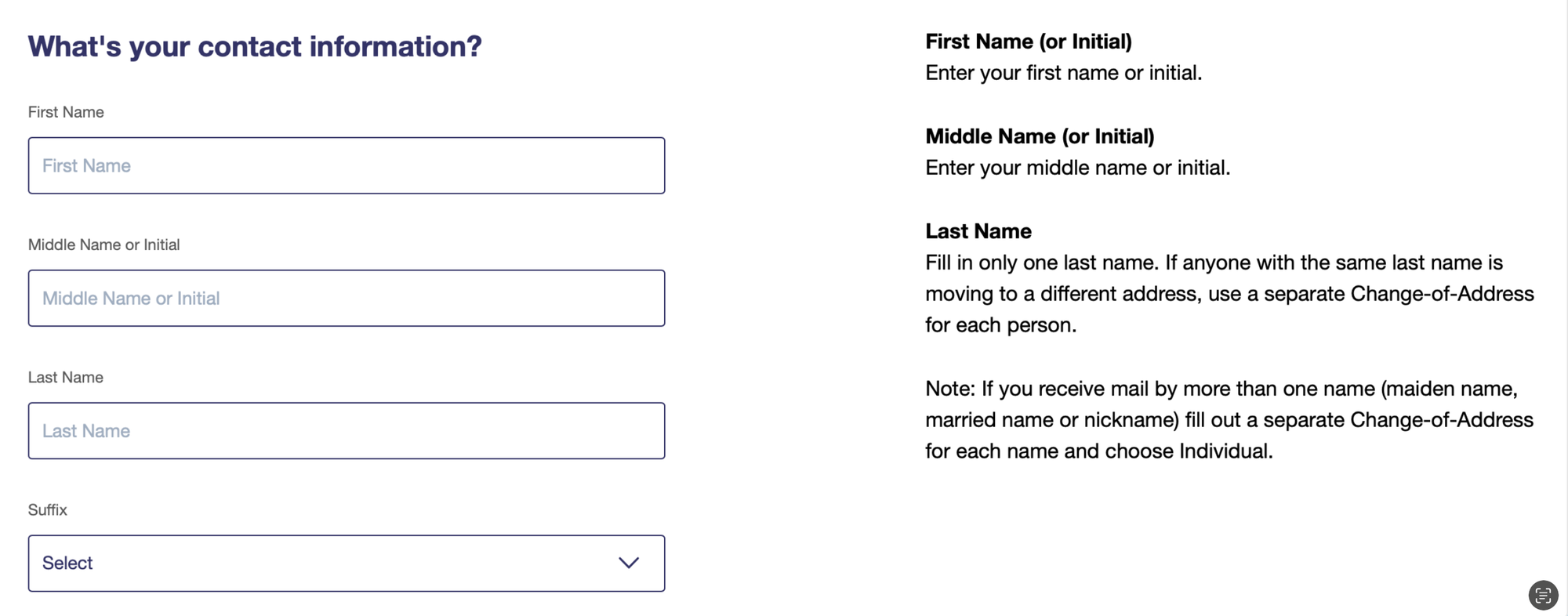
Let the folly of my ways serve as a warning: Even though it is 2026, the USPS computer that sorts the mail cannot identify that the Leah Reich receiving mail at [this address] is the same person as Leah Reich, PhD receiving mail at [this address]. It will treat all suffixes the same. It will read REICH PHD and say, ah no! This is not the person! REJECT. Any mail sorted by the computer will be relegated to Dead Mail, where it will most likely be destroyed. Any mail not sorted by the computer but by your carrier will be returned to sender because "recipient left not forwarding address."
You can override the carrier problem by individually talking to each one of your carriers (all three of mine are so nice, thank you all) and letting them know of this enormous cock up, so they can grab any mail the computer doesn't relegate to Mail Hell. You cannot override the computer without submitting a correction to the change of address, saying you only want the mail for Leah Reich, not for Leah Reich, PhD or Leah Jane Reich, PhD. I spent five hours yesterday in 95 degree heat trying to figure all of this out. I will let you know how long that takes.
Leah Reich | Meets Most Newsletter
Join the newsletter to receive the latest updates in your inbox.