
Silicon Valley is a Black Hole Waiting to Collapse in on Itself
One of the most challenging things for me about doing a newsletter is that I feel like I have to come up with a new topic every week. It's a funny thing to admit because I always have a million ideas romping around in my brain, and there's not exactly a dearth of newsletter-worthy headlines these days, but somehow each week I always think "How on earth is it Wednesday again?? What am I supposed to write about?" The feeling I have is that if you're here, willingly subscribing and reading and maybe even paying for this newsletter (and if you do, I love you the most), the very least I can do is make it extremely worth your while.
Meets Most is a reader-supported newsletter (no ads, no affiliate links). If you enjoy it, you can become a paid subscriber. Your support means a lot! Thanks for being here.
But then, a few weeks ago, I wrote two newsletters in a row that, frankly, were not the type of newsletter I would have categorized as "worth anyone's while." One was a panic attack about the new apartment I'd rented, and the next was... I don't even know? Some vague thoughts about AI that hadn't fully coalesced? Somehow people loved and responded to them, more than most of the newsletters I've written so far. And that got me thinking: Maybe my friend Brian was right, and the best thing you can write is the thing that you most want to read.
Which is why, when I was texting with him earlier and he asked what my newsletter was about this week, I said "I'll probably just continue the conversations we've been having!" He mentioned the Sam Altman-Elon Musk trial as something that might be fun to write about because, and I quote, "These people are such fucking dorks." I know that's newsier, I said, but I'd prefer he wrote about it because: 1. He'd be way funnier than I would, 2. Sure, I want to laugh at these assholes, but also we need to focus on what the hell the rest of us are going to do, and 3. Everyone already knows these two people are absolute sociopaths who are full of shit. I'm fascinated by the spectacle, and I want smart, funny people to tear it all down. It's just that I'm better at writing for people who want to build back up.
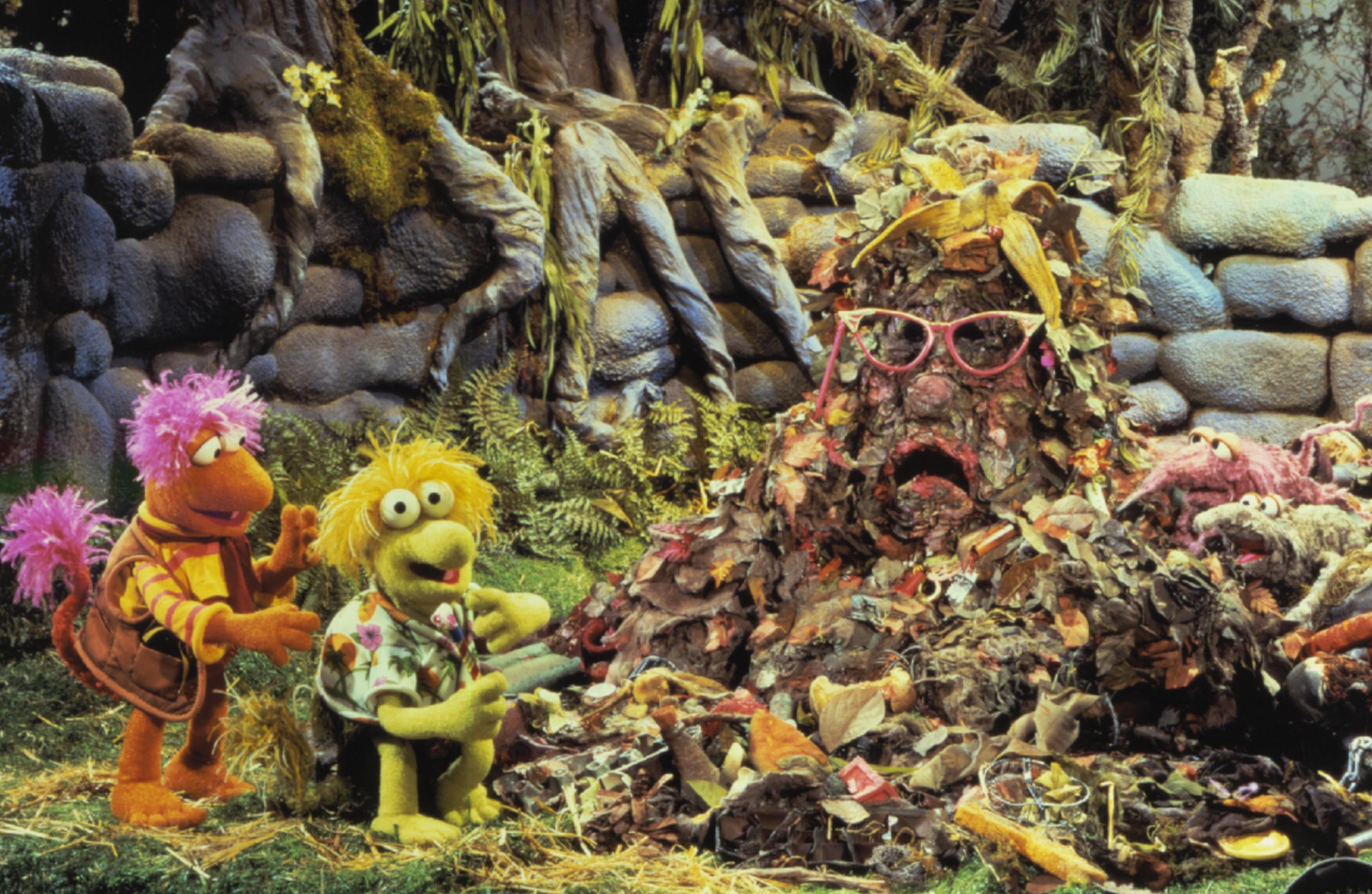
(Side note: This brought us to the topic of Fraggle Rock, which is a surprisingly useful text for everything that's happening right now. From Wikipedia: "One of the main themes of the series is that, although the three species depend on the other for their survival, they usually fail to communicate due to vast differences in their biology and culture." Brian said he was a Fraggle and I was more of a Doozer, but we all know that's not true. I'm Marjory the Trash Heap, "a large, matronly, sentient compost heap" who "knows all and sees all," and who, "by her own admission, has everything.")
Anyway, I think one of the reasons I get so flustered when it comes to thinking of a weekly topic is we've been trained that everything has to be new and fresh and exciting. You know, if you're not constantly posting content, will you build an audience? If your content isn't cool and fresh every time you post it, will the algorithm(s) pick it up? Will anyone care? Or is this yet another mindset and habit we need to train ourselves out of?
I don't want to feel like I'm drowning in a flood of endless news, and I don't want to be constantly distracted by all these sociopaths and assholes—so distracted that I actually can't build anything. Instead, what if I keep trundling along, writing imperfect newsletters and making goofy, rambling TikToks (yes, I'm doing that now, please join me so I don't feel lame)? What if I focus on this big conversation we're having here, on deep dives into this incredibly important set of topics I care about? Well, what will happen will be that I won't get rich (or even make a living), but I might make a difference. Which would be cool too.
Last Thursday, I had my monthly catch-up call with one of my oldest friends, who also happens to be named Brian. This Brian was partly responsible for my entire internet existence: He gave me my very first email address in 1992, when I was a freshman at Cal, and he was a sophomore who had root access on a server and who had also built a chat room for ravers (vrave). He went on to do a lot of remarkable, truly important things in tech and beyond (please read his Wikipedia page), and while we sort of kept in touch over the years, we only recently reconnected in a meaningful way. We talk a lot about the past and the future of tech, and about AI of course. He's kind of a barometer for me, as are many of you who comment—if he's inspired by what I've written, or if he wants to debate it, or even if he disagrees, I feel like I'm on the right track. Some of you have so much more technical knowledge than I do, or you've had bigger roles in the industry, so I often think "oh god, am I about to get this embarrassingly wrong?" But magically, you all seem to respond in similar ways, with similar thoughts, which makes me even more determined to keep having this conversation.
For example, last week I got another great comment from Buffy, a long-time internet pal and marketing guru. She said:
I think IBM and HP were pioneers here, in recognizing that the marketing/branding side of things was a key to expansion, and then Jobs turned that up to eleven.
And I think that's where this feeling that I think we all have of being lost in the desert with no clear direction to go in comes from: that shift into pure marketing messaging that Jobs brought in has led us into the constant search (by VCs) for Unicorns that capture the imagination, but are in pursuit of those new technologies that are just "problem creators" that can spawn sub-industries to support what are basically the newest Pet Rock.
What's funny is that, on Thursday morning, Brian and I also talked about exactly what Buffy describes here, but he brought it up before he ever saw Buffy's comment. At first, he wanted to push back a little on what I'd written, much like Indy did in another comment.
As a bit of pushback, as someone who spent a good chunk of my checkered career in media production (small newspapers, magazines, pop videos, small ad spots) a lot of things the tech industry built did make new and interesting things possible. Like any technology, it brought problems too, but I'm not sure how much they (rather than the economists) are responsible for the biggest ones.
Brian argued along the same lines: It wasn't true that Silicon Valley never cared about what people wanted—after all, he and I were online in those early days together, and we both remember how many things technology improved. Not having to find a phone book, being able to learn so much about a single topic without having to go to multiple libraries, connecting with people who shared your interests. Plenty of stuff became easier, or more fun, or both, right?
Well sure! I never said technology was bad, or that Silicon Valley never built anything fun or useful. There's a lot I love and value about technology. The problem, I argued, is with the industry itself. The greatest technology in the world can still be shaped into the shittiest, most harmful products, because what matters most is what benefits the companies, the investors, the leadership, and the industry itself. The problem I have isn't with most of the technology itself, it's with the products the industry shapes the technology into, and the way they ultimately aren't in service of people or humanity. Tech doesn't work for us—we work for tech.
Just like Buffy's comment, we talked about the marketing aspect of the industry, and specifically the VC problem. Venture capital buys investors a lottery ticket. If it's a winning ticket, it needs to pay out. So every product, regardless of original intent or potential, has to be profitable. Not just a little profitable, but stupidly, obscenely profitable.
Then Chris popped back by, with yet another super interesting bunch of thoughts and insights. In particular, he brought up the money issue.
But the really dysfunctional thing that's overwhelmingly taken over now is hooking the output of the money engine directly into the input, with no chance for it to spill over the edges and create positive externalities. Suck in the money from venture capital, use it to buy things that you can turn into more money as you destroy them, and put that money back into the venture capital system. Get money to make AI, and feed all that money into AI to make more AI.
This is something I hadn't considered before. In previous industry cycles, there was a lot of spillover effect in terms of both the money and the technology. People could harness advances to build stuff beyond what the big companies created, sometimes getting in ahead of those companies but sometimes coming in maybe a few iterations down the line and improving a concept enough that the bigs had to sit up and take notice. But the money also allowed for more growth, more hiring, more opportunity. That's obviously not the case now, as AI threatens both tech and non-tech roles and disciplines. AI money and AI technology are only building opportunity for increasingly smaller groups within the industry.
Which sounds awful and scary, and which I think is going to remain awful and scary for a while. It's certainly awful and scary for the 80,000 Meta employees who just learned they have to wait a month to find out whether or not they're going to lose their jobs in a forthcoming round of layoffs—a new level of sociopathy even for Meta leadership.
But weirdly, it also makes me think there's going to be an endpoint to all this madness. Buffy's with me on this: "Ever the optimist, I think this pendulum will start swinging back precisely because AI has gotten so absurd, and the investments so large with a clear crash right around the corner."
I see it more as a black hole collapsing in on itself. Funneling the money back into AI over and over, condensing down the groups working on this technology to ever-smaller numbers, sucking all the oxygen out of the industry and out of the customer base seems like a recipe for eventual self-destruction. The industry has already strip-mined its end users for decades. It took our money, then our data, then our friendships and our content, finally our jobs. Now it has to strip-mine itself. Good luck with that, guys.
Until next Wednesday!
Lx
Leah Reich | Meets Most Newsletter
Join the newsletter to receive the latest updates in your inbox.