
Little Fish Eat Big Fish
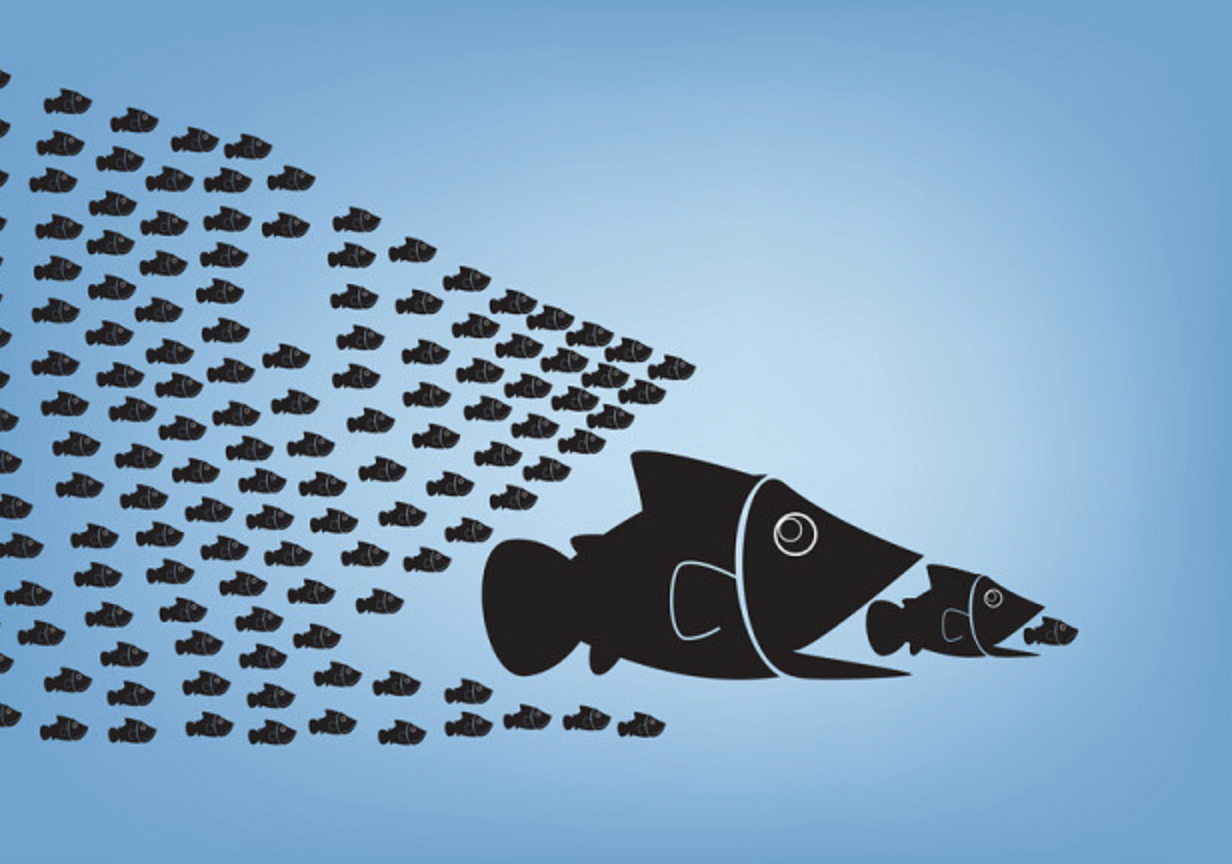
This weekend, you may have learned that social media and relentless footage of atrocities do not, in fact, desensitize us. We are all—those of us with moral and ethical fibers left in our bodies, I mean—still capable of feeling many, many feelings when we witness a human being executed in broad daylight. Even before we learned who that human was, what he had and hadn't done, we felt horrified, enraged, saddened, resolute, scared, exhausted. Yes, we saw clearly and without the haze of misinformation, but we also felt. Please hold onto that.
When I wrote about mutual aid and Minneapolis last week (a subject I will return to), I obviously had no idea what was coming. Well, maybe a little idea. We knew things were going to get (and still might get) worse before they got better. We also knew (or we should have known) that this kind of violence isn't new. It happens, it just might not have happened to someone you know or who looks like you. Luckily, we are attuned to nuance and have been paying attention for years now, right? Right?
Well, not everyone. While I was writing this I got into an argument with someone I used to be friends with because she thinks Alex Pretti is partially responsible for his own murder given that he may or may not have kicked a car and spit on an officer on a different day, per an unverified video. We, the people, still have a very long way to go.
To be honest, I don't even know if argument is the right word. I asked her a question about a story she posted on Instagram that I happened to see. We don't know each other well and were friendly some 10 to 15 years ago, but we're still connected through social media where the various strata of your life layer on top of each other. We certainly don't know each other well enough that I knew she thought this way. We talk maybe once every few years. But we know each other.
One of the things I learned working in the tech industry is that I am not always great at convincing people at scale. I've done it, don't get me wrong, but it's often a byproduct of the work I'm better at: Giving people a language so they can talk easily about complicated problems. Convincing people one-on-one, or connecting deeply with a specific team building a specific feature. That's how you make features and products that people really like. Unfortunately, the so-called impact comes when you win over the decision-makers. When you change the big picture, through overall strategy or change legislation. If I'd changed more roadmaps and fewer actual products, maybe things would have been different for me. But such is life.
Something about this has never sat right with me, though. It's not just that I'm good at the individual level, helping people connect to a more universal understanding than they had before. It's that I don't believe sweeping change is only top down. Sometimes it's bottoms up, grassroots style. Sometimes it's both. Which is why it's always driven me nuts that we celebrate the people who work at scale, but not the people who weave together all of the smaller interactions and shifts that also make broader change possible. As a friend of mine said when I told him about this conversation, "Nothing is more effective in an individual case than directly being called out by someone you know. Like they'll NEVER admit you're right in the moment but in the future they'll be more likely to change their minds, probably without even knowing why."
In the sociology of social movements, there's a concept called the conversion narrative. You may have heard of it, as it also applies to religious experiences, for obvious reasons. A conversion narrative is a retroactive narrative someone provides for why they joined something, whether a movement or a group or a religion. These retroactive narratives usually point to a moment: This is when everything changed for me. This is when my eyes were opened. This is when the scales fell away and I saw how wrong I'd been. But of course, there is no single moment. Over time, a person is exposed to a way of thinking that contradicts or challenges their existing belief system. Often they they just double down. They may double down forever! But sometimes something starts to change their way of thinking. Like my friend said, that something can very effective when it comes from someone they know, from a one-on-one interaction with another human being.
This past weekend felt like the birth of a collective conversion narrative for a lot of people, a watershed moment that shifted even staunch Republicans who previously supported ICE and DHS' deportation efforts. It has also felt like a moment in which we're seeing just how powerful all these local, decentralized efforts can be, both on the ground but also online, like I wrote about last week. If people are willing to question themselves and their behavior, to try a new way, I am all for the conversion narrative. Whatever gets you here.
At my jobs I was the queen of uncomfortable conversations. I would rather do the awkward and sometimes scary thing of asking someone to talk, of having the hard conversation and getting things out in the open, rather than navigate an increasingly toxic relationship with endless miscommunications. I've always been someone who will privately and publicly call other people out—and by always I mean I did it in a speech at my high school graduation in 1992 (ask me about that sometime!). Not everyone is like this, but we all have our skills, and right now is a moment when these small actions feel vital and powerful. The big institutions are careening off the rails but we can still reach individuals. Tiny cracks are showing: People struggling to say the right thing, open to having someone tell them how to do this. People sharing their opinions in the heat of anger, buoyed by false narratives and possibly false imagery. Wedge your way in. Try to get that other little fish to swim in a different direction with you. Start small, and maybe we can eat the big fish.
Until next Wednesday.
Lx
Leah Reich | Meets Most Newsletter
Join the newsletter to receive the latest updates in your inbox.