
Guy With a Vomit Hose Walks Into an Advertising Agency
Of all the great television shows ever created, Mad Men is the greatest. This is not an invitation to argue or discuss but a simple declaration of fact. Should you like to declare your own facts, you too can start a newsletter. Or a podcast!
I didn't always think Mad Men was the greatest. In fact, the first time I watched it, I only made it through the first three seasons on DVD. I liked it, sure, but I didn't feel compelled to continue. It was no Deadwood or Oz, the two shows that had replaced The Wire in my heart, which of course was the show that had supplanted The X-Files. I'd loved lots of other shows too, but I loved them more like I love The Gilded Age, which as we all know is the best worst television show ever created. Anyway, it wasn't until recently, during the year when all of us watched an awful lot of television, that I finally sat down and watched Mad Men start to finish. And then I watched it again, start to finish. And again.
What is it that makes Mad Men so great? It's not the aesthetics and the visuals, the obsessive attention to detail, the set design and the costuming, as incredible as all of those are. It's not the anti-hero-ness of it all, or the nostalgia for an era many of us didn't even live through. What makes it great is that it is a deeply human show about change. In fact, it's a deeply human show about how actual humans change: Slowly, painfully, not linearly, sometimes in reverse, sometimes not at all. Set against a backdrop of explosive changes during a decade known for its extraordinary societal shifts, social and personal changes move at their own pace and in their own time.
In fact, Mad Men is, in some ways, a meta-narrative. It's a beautiful show with visual appeal that sucks you in because it covers up the deep wells of human need and desire that make you come back for more. It's a show about an ad man in an ad agency who is the living example of his own work. Season 1 Don Draper tells us that "Advertising is based on one thing: Happiness. And you know what happiness is? It's the smell of a new car. It's freedom from fear. It's a billboard on the side of the road that screams with reassurance, 'It's okay. You are okay.'" Slick, desirable Don Draper on the surface, powered by scared, desperate Dick Whitman inside. More than any show, Mad Men bounces between the personal and the universal, over and over. And you know how your girl feels about that.
This is why I kind of love the absolutely shambolic Mad Men 4K rerelease on HBO Max. Because what embodies this universal moment better than taking something exquisitely crafted and deeply human, and absolutely fucking it up by handing the reins over to technology?
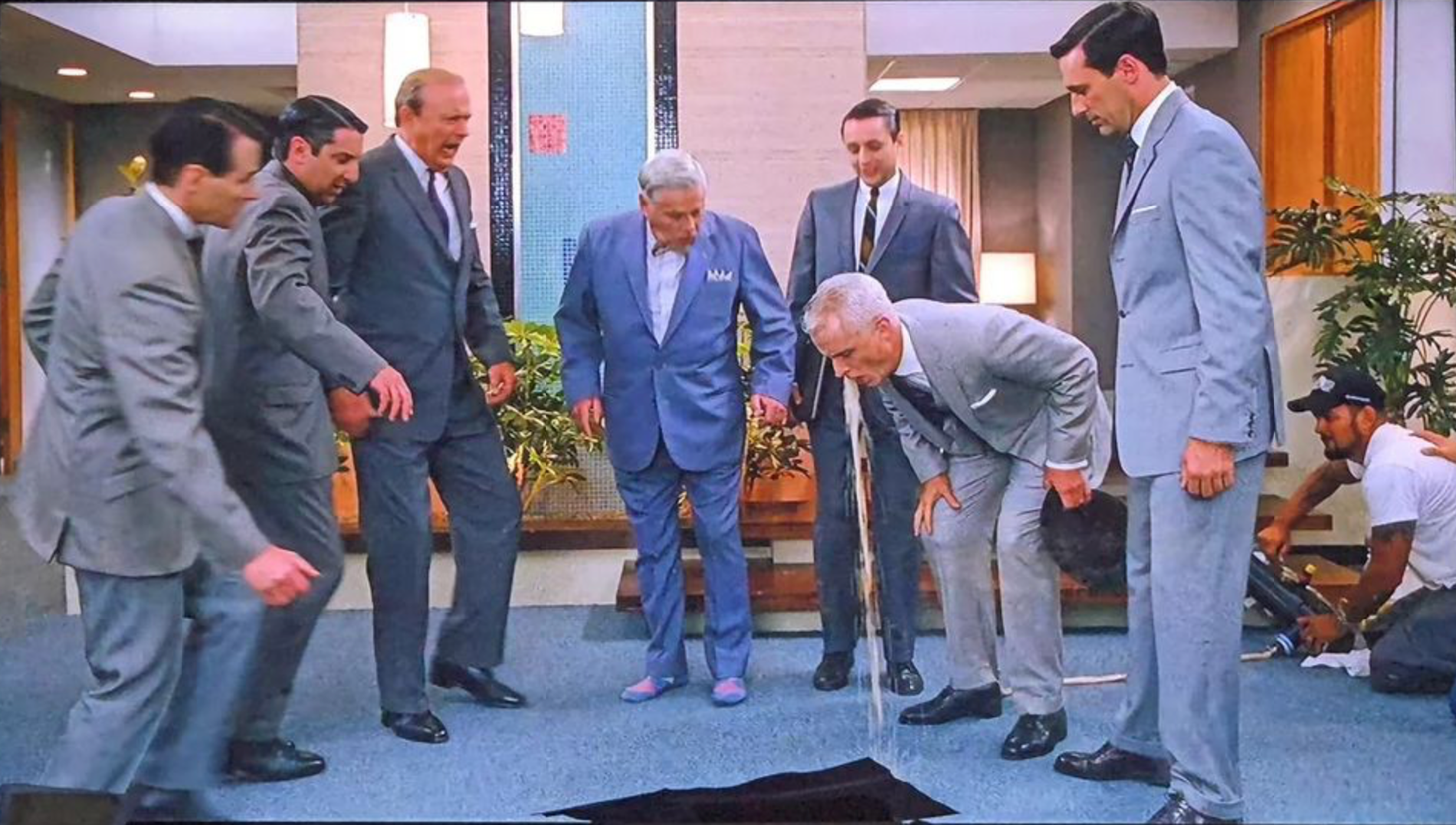
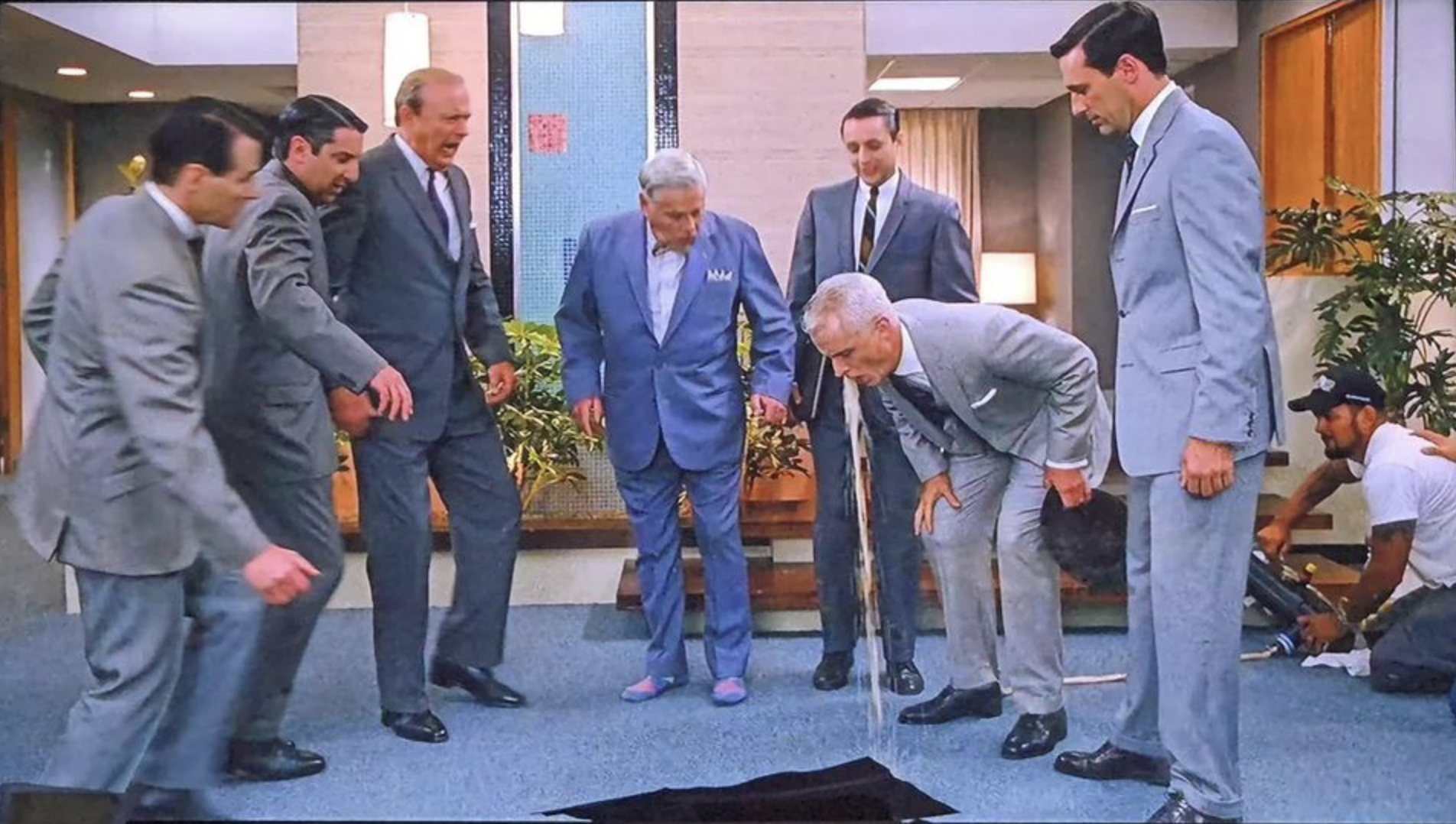
Now, none of us know exactly how this premium remaster became a premium disaster. There are some theories, sure. All we know is that there are major problems with the metadata—titles and episodes don't match, episode title cards are missing—and, most egregiously, a problem with season 1's famous scene of Roger puking oysters all over the agency floor in front of important clients. Here is the original scene.
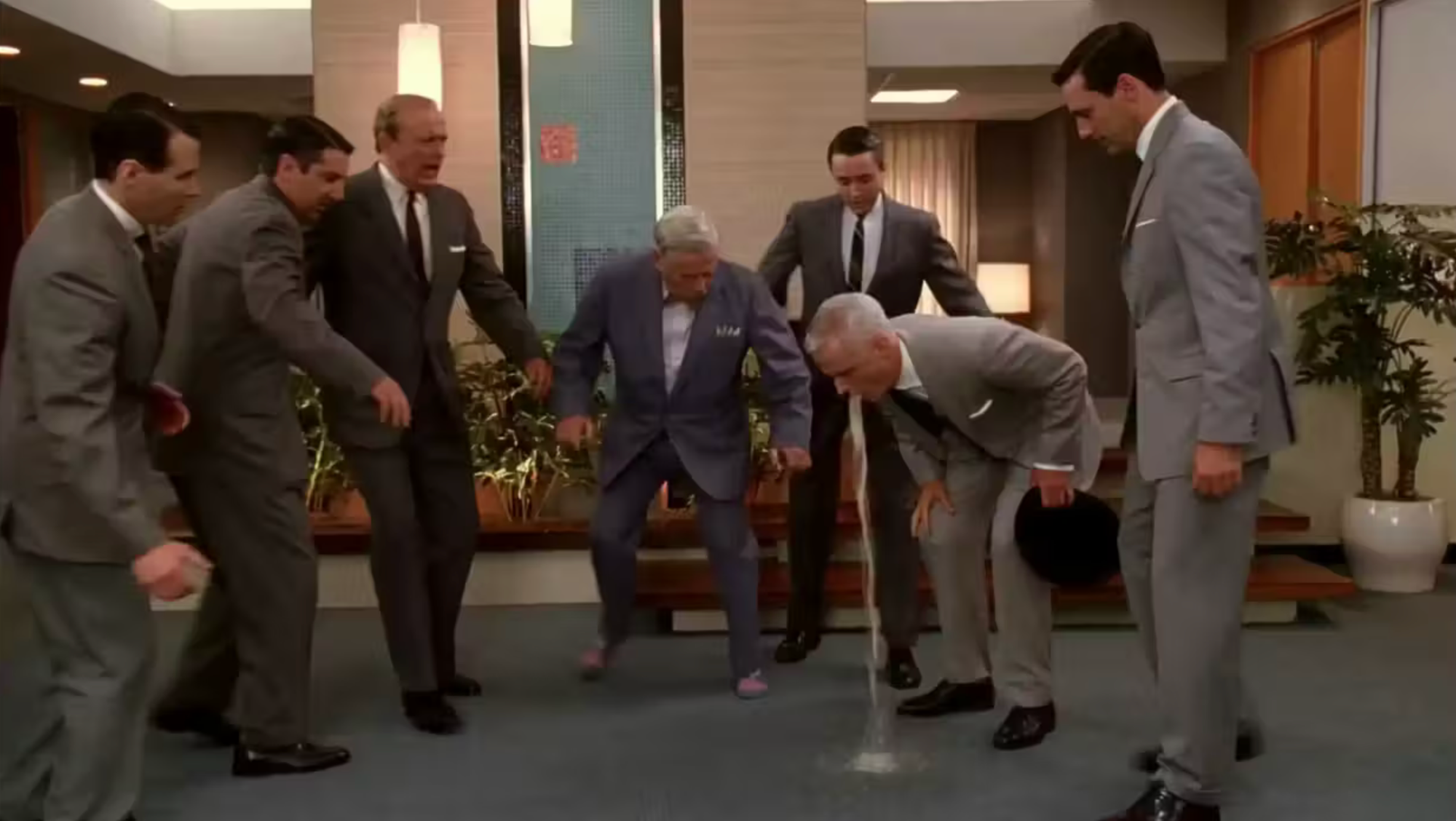
And here again is the remastered scene.
Look. People fuck up all the time. We make mistakes. It's something humans are known for, in fact! Being fallible. Falling down on the job. Phoning it in. Saying we did a thorough quality check when we absolutely did not even do a quality check. Human error! Conversely, computers tend to make fewer errors on the whole. Right? I mean, technically yes, as long as we're talking about repetitive tasks, processing data, and dealing with issues they're programmed to handle. Also technically yes as long as there are no flaws in their programming, design, or data sets. Garbage in, garbage out, baby!
Which is why I remain both bewildered and fascinated by things like startup founders insisting that GenAI podcasts will be wonderful. Do you remember this story from September? I didn't remember it because I never saw it, and unfortunately it made the rounds again so someone shared it with me. I love having my day ruined like that.
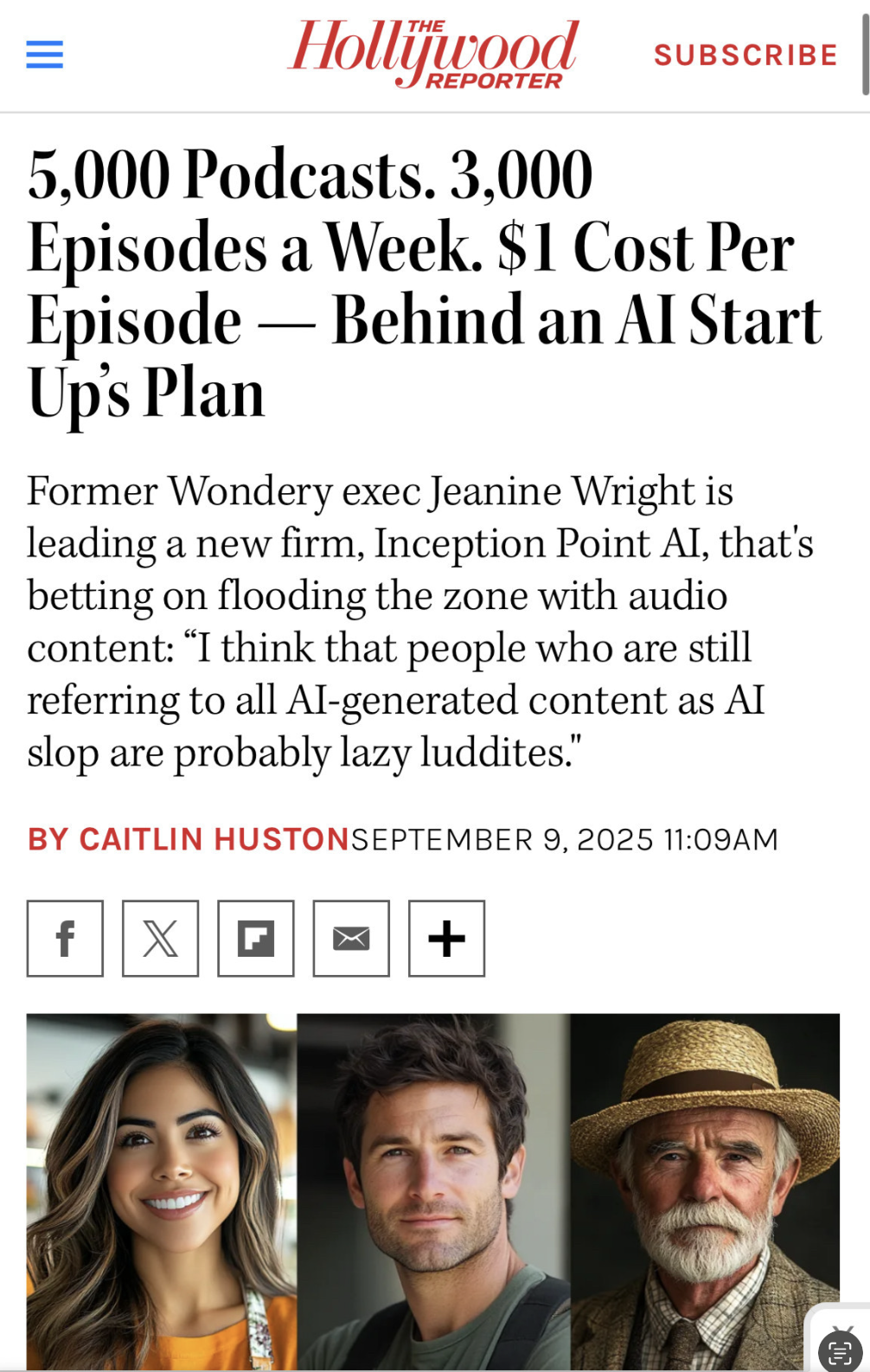
Can I just pause here to say I don't want any more zones being flooded. We can all agree that, in general, flooding a zone is bad, right? Isn't that what Project 2025 and Steve Bannon are all about? You might as well call it what it is: A shit tsunami.
If you did not click on the link to that story because you did not want your day ruined, well too bad because I'm here to tell you there's an AI-generated food podcast narrator named Claire Delish, which, I mean, you've got to be fucking kidding me. Even better, the company that makes Claire Delish possible is using... her? it? that? as an example of the sort of thing that the CEO believes is "really good stuff." She also says that "people who are still referring to all AI-generated content as AI slop are probably lazy luddites." Because nothing screams "I'm not lazy" like naming your food podcaster "Claire Delish," right?
For the record, the CEO also is also quoted as saying “We believe that in the near future half the people on the planet will be AI, and we are the company that’s bringing those people to life." Props to Hollywood Reporter for subtly undermining that hideous statement by immediately contextualizing it with this description of CEO Jeanine Wright: "previously chief operating officer of podcasting company Wondery, which has recently had to reorganize under the changing podcast landscape." And by "reorganize," they mean that four years after being acquired by Amazon 110 people got laid off, others moved over to Audible, Wondery was broken up, and—you knew this was coming—they began pivoting to video. So it's good to know that even industry magazines have a lot of confidence in Inception Point AI and its Quiet Please Podcast Network.
Luckily for me, someone else already did a bit of a deep dive (I originally typed "deep die" and frankly that feels more appropriate) into these AI podcasts, and it's quite good. It is unfortunately on Substack, but please hold your nose and click this once. Think of it as a thanks to the author for actually listening to Claire Delish so you don't have to.
 Fault Tolerant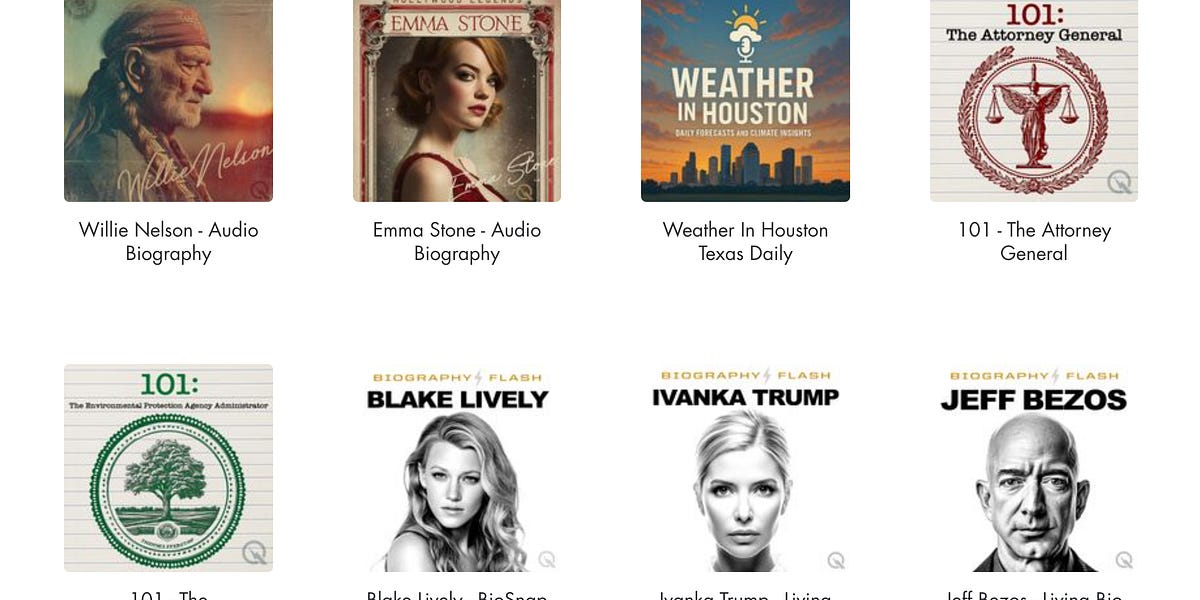
I love the word dreck
What I like best about that piece is the end (really, you should read it) because it's everything I've been saying for years about human connection and community. But the whole Mad Men thing has reminded me of something equally important: We do not and will not change at the speed of technology. You and I, human beings that we are, will change slowly. This is part of what makes us actual people, unlike the "AI people" with whom we'll supposedly share our planet very soon. We cannot just be reprogrammed, or suddenly process millions of pages of data, or fix our problems with some quick debugging. It's funny because so many of us strive for perfection and flawlessness, but now I see these AI "people" with their creepily smooth skin and their overly designed personalities, and I think I'll take pimples and broccoli farts any day over whatever that is: Slick avatars powered by desperation and fear and greed. Plus, GenAI creations aren't flawless! They just mimic some asshole's weird ideas of desirability and happiness! They're billboards screaming reassurance! Except you are not okay! None of us are!
We live in a moment of absolute insanity, with every zone being flooded 24/7. There's constant overstimulation and over saturation and overwhelm, as attention spans decrease and loneliness skyrockets. It feels like we need to process faster and adjust more quickly, and to change at the same rate as everything around us. But that's not how it works. That's not how it's ever worked.
The other night I went to dinner with my parents and their neighbors (hello if you are reading this!). I spent some time chatting with one of the neighbors' kids, a lovely young Gen Z woman in her early 20s, who at one point asked me if I knew anything about Substack because she'd heard of it but didn't really know much. It was a helpful reminder that what I know or what feels obvious to me is absolutely not common knowledge to everyone, and that for all our algorithms and content flattening, cultural shifts and adoption of new technologies still follow familiar patterns. We live in a world the denizens of Mad Men couldn't even begin to fathom, but humans are still the same in some fundamental ways. Change really is the only constant, in both meanings of the word.
Until next week!
Lx
Leah Reich | Meets Most Newsletter
Join the newsletter to receive the latest updates in your inbox.