
Bring Back Joy
Did you watch the Bad Bunny halftime show on Sunday evening? Please tell me you did. If you didn't, you missed out on one of the most joyful, life-affirming, and surprisingly intimate performances in recent memory. I've watched it multiple times now and have seen countless clips of the show, of people reacting to the show, of conversations with people who were in the show (namely Toñita). I can't get enough. It makes me feel inside in the same way that I know the first truly warm and beautiful day of this year is going to feel outside: Renewed, reaffirmed, like a dark spell is slowly breaking.
I've been thinking a little about joy lately. About holding onto optimism and hope, and about finding the potential for good even in the most unlikely spaces. January was a challenging month, and as it came to an end I was full of doubt: What am I doing? Am I crazy? Everything is falling apart, people are being terrorized, and I want us to... be nicer online? Is that it? Leah, please be real.
Then right before February arrived, I had a wonderful conversation with a friend and ex-coworker (hi Mélanie!), someone whose opinion and perspective I really value. I told her a little about this doubt, and how I felt like a crazy person for sitting here quietly in my little corner writing about building smaller products and working on being kinder humans. We talked about the value of more intimate spaces and of keeping things small, more human-scaled. Then she said (I'm paraphrasing here), "You help people build a vocabulary and a tool kit to think more critically, but you also see the positive in a product, the potential. You don't focus only on the negative aspects." She reminded me: "You were talking about participation at Instagram two years before everyone else was. The eventual focus on participation started with you."
If you've been here for a while, you know I frequently talk about changing how we think about sharing online. But you'd have to have been here since the beginning to remember this newsletter (please forgive the AI imagery, it was before I knew) in which I broke down the social media landscape, along with the recently-launched Threads. I mentioned a note I'd written at Instagram in 2021 in which I argued that the company needed to move away from “sharing to”—broadcast sharing to a passive audience, treating followers like data points—and instead build “sharing with” features that allowed people to connect in meaningful, intentional, and more human ways.
What you need to remember is that, at that point in Instagram's history, sharing metrics were really declining. Sharing in Instagram Feed had long-since declined for normal users, but now (as in, six years ago), sharing was declining everywhere including in Stories and via direct messaging. I'm leaving out Reels because, I mean, no one was really using Reels much at that point. Sorry, the proper terminology is that the Reels product was having trouble finding good market fit. Anyway, all of this was a big Code Red for the company, so a lot of effort went into "how do we get people to share more." I can go into all this in more detail if people are interested—please let me know, seriously—but for now let me get back to participation.
While working on the "sharing with" model, I tried to build on other researchers' insights from across the company, stuff about "what makes users too uncomfortable to share" or "what helps reassure users so they are more willing to share." Eventually, I worked with some of those researchers, and some data scientists, to pull together collected insights that could help the company better understand more broadly what the real obstacles were to sharing—and, subsequently, how those obstacles also affected other metrics, such as interaction, engagement, and so on. A shocking percentage of Instagram's user base was entirely passive, only opening the app to consume, not even liking or commenting. But of course, sharing was most important because, as we know, content is inventory. Without inventory, the social media user experience is very, very bad.
Out of all this, I built on an idea I'd started noodling on in the "sharing with" note: The idea that people want to be able to participate in ways that feel good, meaningful, safe, and fun. People like participating in person and they like participating online, but people also—as any user researcher can tell you—frequently do unexpected things. Just because a product designer has thought up a couple of modes of interaction and engagement doesn't mean that's all the modes that exist. I don't know about you, but there's more I want to do besides "share a photo" or "like a photo" or "comment on a photo." All of those behaviors are about the media, not about the social.
The analogy I used was a baseball stadium. Don't worry, you don't have to know anything about or even like sports to get this one, just bear with me. Instagram, I said, had built a really cool baseball stadium and then populated it almost entirely with star pitchers. Who the fuck wants that? You know what's cool about a baseball stadium? There's room for literally everyone: The star pitcher, the person who's great in the outfield, the dude who can smack home runs, the fast runners, the mascot, the person who loves nerding out to stats, the devoted fans, the parents, the friends who don't care about baseball at all but do want to hang out with friends and have fun and eat overpriced nachos. If your team is not the best and has yet to be betrayed by money-grubbing owners (shoutout Oakland A's), there's even room for people who don't have a ton of money and need a budget option!
Now, you might be looking at all this going, yeah great but how do you build something like this online? Well, my friend, you talk to people and you get creative. What does it mean to cheer people on? What does it mean to be a devoted fan? What does it mean to connect with other nerds over shared nerdery? I'm not saying it's easy. Not everything will be a winner. Sometimes you'll need to mix digital and physical. Always you'll need to think about the real deep human needs people are trying to meet.
What's been interesting to me is watching people think that's what Substack offers, only for it to very clearly morph into another form of toxic social media. Recently there was a big uproar over a very popular fashion writer's (possibly) ill-advised announcement of her new Substack newsletter, all about beautymaxxing and healthmaxxing and god knows what else. The announcement hit the Substack algorithm like shit hitting the proverbial fan. Suddenly her comment section and then the broader Substack "Notes" feature were full of people dragging the writer to hell and back, or arguing about the validity of this work, or dismissively sneering at concerns. People are fed up with endless marketing, hollow influencers, content that makes us feel bad. But what I also saw was what happens when "participation" exists primarily in service of the social media engine. All the fun, supportive, "oh wow I can really build my community on Substack" was now overshadowed by one of the first truly toxic viral moments from within the ecosystem. That's literally what social media is designed to do. We feed the engine so it can consume us and spit us out, faster and faster.
Before you dismiss any of this: How big has participation once again become in recent years? Not just online but offline. People want more, and they're yearning for something better and more meaningful. It's easy to rely on "fuck the internet, I'm going offline" because that's the only analog (literally) for real, meaningful participation that people have. That's why people got so excited about Substack in the first place, because it was another wolf in sheep's clothing. People want community, they want connection, they want to participate. We're all unfortunately going to have to do more of the work, and stop relying on these big tech engines to do it for us.
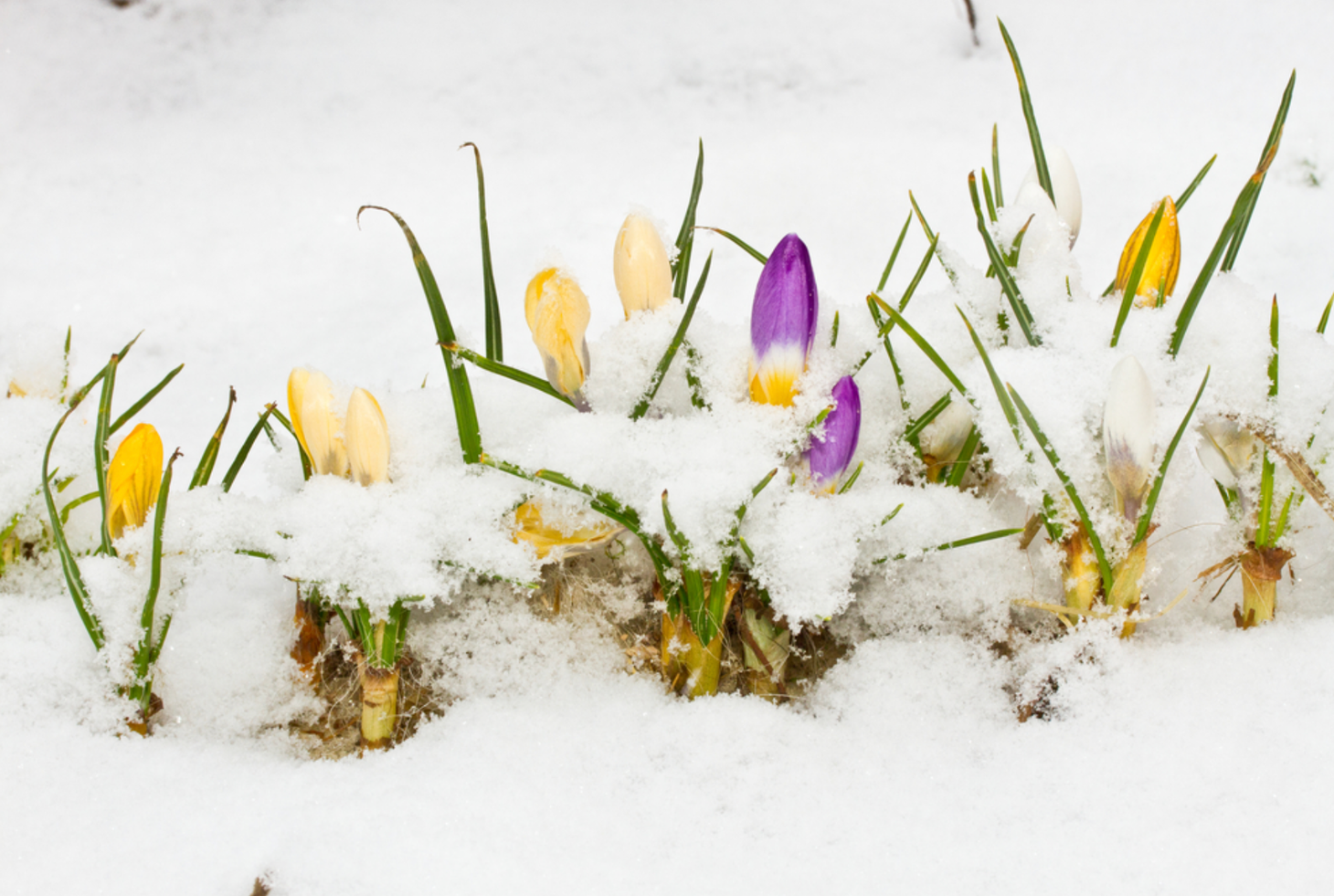
And believe me when I tell you I can feel the same deep need coming in the form of joy, and in the form of more intimate local spaces, wither online or off. Not yet, because we've got a lot of difficult stuff ahead and plenty of righteous, valid anger, but soon. I know it's easy to say this, harder to really believe it. Trust me, earlier I banged out the first three paragraphs of this newsletter, and then for some unknown reason descended into the absolute pissiest mood. All scrunched down on the sofa in the least ergonomic position possible, ready to fling my laptop across the room, feeling like throwing a tantrum for no discernible reason. This winter—which has been Extremely Winter here on the East Coast—combined with everything else going on is grinding optimism into dust. But trust me. Spring is coming.
Until next Wednesday.
Lx
Leah Reich | Meets Most Newsletter
Join the newsletter to receive the latest updates in your inbox.